|
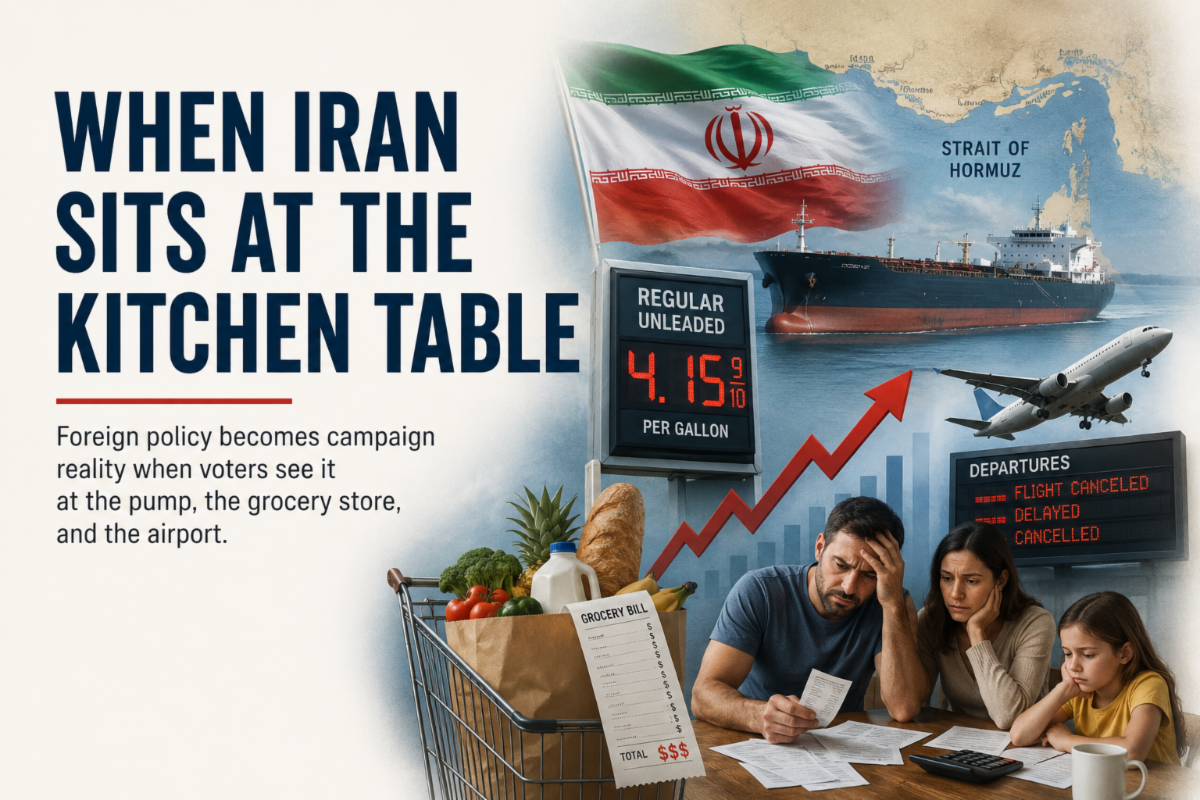
They wait for the next poll. They wait for the crosstab analysis. They wait for the consultant to write another memo, only to announce that affordability has emerged as an issue. By then, every voter already knew it because he filled his tank, booked a flight, or canceled the trip altogether.
Polling is essential, but it is not a smoke alarm. The data trains the model. The model provides an actionable score to thousands, tens of thousands, or millions of voters.
Sentiment is the smoke alarm.
If voters in the suburban collar counties suddenly start talking about gas prices, canceled vacations, grocery sticker shock, and “another foreign mess,” the campaign cannot wait two weeks to learn whether it matters. It must know now. Sentiment monitoring detects narrative acceleration before traditional polling does. Modeling then tells the campaign which voters within that emotional shift are reachable, persuadable, or vulnerable.
A significant shift in sentiment should prompt a remodeling of the voter file, which will produce a new round of better questions.
Are high-propensity independents reacting to Iran as a national security issue or a household budget issue?
Are lower-propensity base voters becoming more motivated by energy prices?
Are parents with summer travel plans moving differently than retirees on fixed incomes?
Are small-business owners blaming Washington, global chaos, oil companies, sanctions, or all of the above?
Are rural voters responding to fuel and fertilizer costs differently than suburban voters respond to airfare and family budgets?
Are young voters seeing Iran as a foreign policy overreach, or are they simply angry that life has become more expensive again?
Those answers come from an integrated intelligence system.
The survey should properly test the issue, not just ask, “Are you concerned about Iran?” Everyone is concerned about everything when asked by a pollster with a professional voice and a list of options.
The better survey tests frames: energy security, gas prices, inflation, military strength, avoiding another war, domestic production, affordability, travel costs, and confidence in leadership.
Then the model converts those responses into voter-level scores.
Who is economically anxious? Who is security-focused? Who is persuadable on energy independence? Who is likely to punish incumbents for higher costs? Who supports strength abroad yet panics when gas hits the family budget? Who dislikes foreign entanglements yet still wants America to look strong?
“Voters care about affordability” is not useful. Of course they do. Thank you, Captain Crosstab.
The real question is which voters, how many, why, and what message moves them.
A campaign that treats the survey as the final product will produce a polished deck and stale talking points. A campaign that treats the survey as training data to score the voter file can quickly route precisely targeted messages at scale.
That distinction matters more during a price shock than during a sleepy race over drainage ditches and school board minutes.
Volatility punishes slow campaigns.
If gas prices jump, the campaign must know whether to re-score its affordability model. If airfare climbs, it must know whether travel frustration is spreading in family-heavy suburbs. If diesel costs hit farmers and contractors, it must know which voters have shifted from mildly annoyed to politically available. If energy costs spill into groceries, it must know which voters link those costs to the race and which do not.
The wrong campaign sends a single generic message to everyone.
“Candidate Smith will lower costs.”
Wonderful. Let’s make a T-shirt.
The smart campaign sends different messages to different voters because they perceive the same event through different lenses.
For the commuter, gas prices are the issue.
To the parent, groceries and summer travel are the issues.
For the small business owner, shipping and input costs are the issue.
To the veteran, deterrence and strength are the priority.
For the younger voter, another overseas conflict may be the issue.
For the retiree, fixed-income anxiety is the issue.
Same Iran story. Different voter psychology. Different message. Different universe.
This is why message discipline cannot mean repeating the same sentence until everyone at headquarters is bored into submission. Message discipline means staying anchored to the campaign’s argument while translating it into the voter’s lived reality.
A serious campaign builds an Iran-affordability response matrix: energy prices, grocery and household costs, travel and airfare, small-business costs, and national security strength. Then the data team ties those tracks to voter universes.
That is not overcomplication. That is campaigning.
The old way says, “Our poll shows affordability is the top issue.”
The better way says, “Among persuadable suburban independents with high economic anxiety, mentions of gas and groceries spiked in the last 72 hours, and the strongest-performing message ties energy security to household costs.”
One is a sentence in a memo.
The other is a plan.
Polling provides you with the baseline.
Modeling gives you the battlefield.
Sentiment gives you motion.
Together, they give you timing.
And timing is everything in a news environment where the emotional half-life of a story may be shorter than the approval process for a mail piece takes.
It is not just speed that matters; it is kinetics that keep the campaign always advancing forward without pause against the opponent.
Campaigns should not abandon polling. They should respect it enough to use it properly. Polling begins the intelligence process. It tells the campaign what to model. Modeling tells the campaign whom to contact. Sentiment tells the campaign when the environment has changed enough to act again.
That loop must keep running.
Campaigns need to stop pretending that foreign and domestic policy live in separate filing cabinets. Voters do not think that way. Iran will not remain a single story. It will splinter into many: gas prices, diesel, electricity, groceries, travel, shipping, fertilizer, consumer confidence, presidential approval, congressional blame, incumbent fatigue, isolationism, hawkishness, energy independence, and summer vacation anxiety.
The campaign that lumps all of that under “foreign policy” deserves to lose.
The campaign that understands the downstream effects will move faster, communicate more clearly, and spend more efficiently.
It is polling, modeling, and sentiment.
The campaign that has all three can see the voter, understand the pressure, and act before the moment passes.
The campaign that does not will wait for the next poll.
By then, voters will have filled the tank, canceled the trip, assigned the blame, and voted for someone else.
Rick Tyler is the Director of the Advanced School of Politics
| 






Leave a Reply