


The 2026 Elections
Everything Fauquier voters need in one place: our candidates for U.S. Senate and Virginia’s 10th District, when and how to vote, and our committee’s position on the three constitutional amendments on your November ballot.
Proven Leaders, Ready to Serve
Two decorated military veterans with decades of national security and public service experience are asking for Fauquier’s support this November.
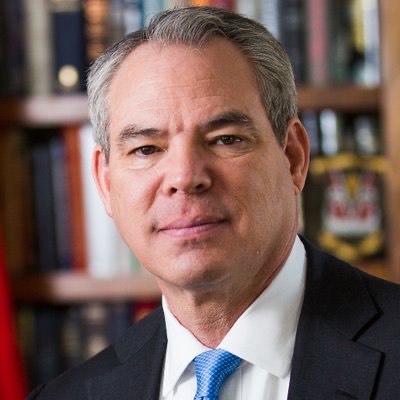
Bert Mizusawa
Bert Mizusawa is a retired Major General of the United States Army, a former senior executive in the federal government, and a nationally respected leader in law, national security, and public service. His career spans more than four decades across military command, legislative oversight, executive leadership, and private legal practice. He commanded a Combined Joint Interagency Task Force in Afghanistan, later served as Senior Advisor to the Director of the CIA, and held a three-star equivalent Senior Executive position overseeing a global organization of more than one million uniformed and civilian personnel as Deputy Under Secretary of the Army. A graduate of West Point, Mizusawa also earned a J.D. from Harvard Law School and a Master in Public Policy from the Harvard Kennedy School, and is a MacArthur Fellow in International Security.

Dave Beckwith
Dave Beckwith is a Loudoun County neighbor, a 30-year Air Force veteran, and a proven public servant ready to bring real experience to Congress. He rose to the rank of Colonel over three decades of service, later serving as Deputy Assistant Secretary of Defense, where he oversaw a $500 billion national security portfolio and a team of 95 people at the Pentagon. A 17-year resident of Loudoun County and a homeschool dad of three, Beckwith has spent his career solving complex problems and delivering results — and says he’s running because Virginia’s 10th District deserves a representative who lives the district’s rhythms, not a career politician.
Grassroots is the only thing that’s ever actually moved Virginia. Every door knocked, sign planted, and dollar given in Fauquier County makes a difference for both of these campaigns.
The Three Constitutional Amendments
Fauquier voters will also decide three permanent changes to Virginia’s Constitution. Here is the exact ballot language for each — side by side with our case against it.
“Fundamental Right to Reproductive Freedom”
“Should the Constitution of Virginia be amended to (i) protect the freedom to make personal decisions about prenatal care, childbirth, postpartum care, birth control, abortion, miscarriage management, and fertility care; (ii) protect doctors, nurses, and patients from being punished for these decisions; and (iii) allow for restrictions on access to abortion during the third trimester of pregnancy except when the patient’s health is at risk or the pregnancy cannot survive?”
Vote NoCreates a fundamental right to “reproductive freedom” covering:
- Prenatal care, childbirth, and postpartum care
- Contraception and fertility care
- Abortion care and miscarriage management
Enforceable against the Commonwealth “unless justified by a compelling state interest achieved by the least restrictive means.”
Virginia already permits abortion up to viability. This is already handled:
- The 2020 Reproductive Health Protection Act already guarantees this access.
- Virginia remains the only Southern state without new post-Roe restrictions.
- There is no gap in access today that requires permanently rewriting the Bill of Rights.
Allows regulation in the third trimester, but with a hard limit — the Commonwealth may never prohibit a third-trimester abortion when:
- A physician judges it “medically indicated” for physical or mental health, or
- The fetus is judged “not viable.”
Current law already handles this responsibly:
- Code §18.2-74 already permits late-term abortion when certified by an attending physician and two consultants.
- This amendment replaces that multi-physician standard with one doctor’s judgment call.
- It does so under a vague “mental health” exception, written permanently into the Constitution.
Bundles two additional categories into the same protection as abortion care:
- Birth control
- “Miscarriage management” — a term with no existing definition in Virginia law
Neither is under threat today, and bundling creates real problems:
- Nobody in Virginia is restricting contraception or miscarriage care right now.
- Two popular, uncontroversial ideas are bundled with the far more contested abortion language.
- “Miscarriage management” uses the same procedures as elective abortion, inviting years of court fights over what it covers.
Lists these side by side with abortion care, all under one identical maximum standard:
- Prenatal care
- Childbirth
- Postpartum care
Nobody is trying to restrict prenatal or postpartum care in Virginia either. But:
- Once grouped under “strict scrutiny,” any safety rule touching this care — licensing, informed consent, reporting — must clear the same highest legal bar as an abortion regulation.
- That’s a lot of unrelated medical care locked behind one very high bar.
Any law touching reproductive decisions must meet the highest legal bar in American law:
- “Compelling state interest”
- “Least restrictive means”
This is the most demanding standard a law can face. Common-sense, currently uncontroversial rules would all have to survive it in court, every time:
- Parental consent for minors
- Licensed-facility requirements
- Physician certification
- Reproductive Health Protection Act (2020)
- Code §18.2-74 — physician certification for post-viability care
- 2026 interstate shield law protecting Virginia providers and patients from out-of-state legal action
“Right to Marriage”
“Should the Constitution of Virginia be amended to (i) remove the ban on same-sex marriage; (ii) affirm that two adults may marry regardless of sex, gender, or race; and (iii) require all legally valid marriages to be treated equally under the law?”
Vote NoStrikes Virginia’s 2006 constitutional definition of marriage and replaces it:
- Removes: marriage defined as between one man and one woman
- Adds: a “fundamental right to marry” for any two adults “regardless of sex, gender, or race”
Nothing about who can marry in Virginia changes today if this fails:
- The ban has been legally unenforceable since 2015 (Obergefell v. Hodges).
- The federal Respect for Marriage Act (2022) already requires every state, including Virginia, to recognize same-sex marriages performed anywhere in the country.
Supporters say it’s a hedge against a future Supreme Court reversing Obergefell.
Even in that hypothetical, we’re already protected:
- The Respect for Marriage Act is a separate, durable federal law passed with bipartisan support.
- It would still require Virginia to honor marriages performed in other states.
- This amendment addresses a speculative scenario a second, independent federal law already guards against.
Bars denial of a marriage license based on three distinct words in the Bill of Rights:
- “Sex”
- “Gender” — left completely undefined
- “Race”
Virginia already has a defined term for this, and this amendment bypasses it:
- “Gender identity” was added to the Virginia Human Rights Act by the 2020 Virginia Values Act.
- That existing law can be amended by an ordinary legislative majority.
- This amendment instead writes a brand-new, undefined word — “gender” — directly into the Bill of Rights, where it becomes permanent.
- Future courts deciding unrelated disputes over schools, sports, or workplaces can point to it as constitutional-level policy.
- Advocacy groups on both sides of this amendment have already flagged this exact concern.
- Obergefell v. Hodges (2015, U.S. Supreme Court)
- Respect for Marriage Act (2022, federal law)
- Loving v. Virginia (1967, U.S. Supreme Court)
- Virginia Values Act (2020) — statutory definition of “gender identity” in the Virginia Human Rights Act
“Right to Vote and Voter Registration”
“Should the Constitution of Virginia be amended (i) to provide for the fundamental right to vote in the Commonwealth, (ii) to revise the qualifications of voters so that a person convicted of a felony is not entitled to vote during his period of incarceration but is automatically invested with the right to vote upon release from incarceration, and (iii) to update the existing prohibition on voting by persons found to be mentally incompetent to instead apply to persons who have been found to lack the capacity to understand the act of voting?”
Vote NoAnyone convicted of a felony would have voting rights automatically restored:
- The moment they walk out of incarceration
- No application, no review, no gubernatorial action required
- For any offense, permanently written into the Constitution
This authority already exists and is already working:
- Virginia’s governor already holds this authority today.
- The current governor restored voting rights to roughly 66,000 people in her first year alone.
- Governors dating back to 2013 have run large-scale restoration programs.
Eliminates the Governor’s discretion entirely — every released felon regains:
- The right to vote
- The right to serve on a jury
- The right to hold public office
- The right to serve as a notary public
With no distinction for the severity of the crime.
Case-by-case executive review isn’t a bureaucratic obstacle — it’s a safeguard that lets the Commonwealth weigh:
- The nature of the offense
- Restitution to victims
- Public safety before restoring rights as serious as jury service and holding office
This amendment removes that judgment permanently, for every future governor.
Writes a single, one-size-fits-all restoration policy into the Constitution, where it can only be changed by another statewide constitutional amendment.
That’s the wrong place to lock this in:
- Restoration policy has already changed multiple times in the last decade.
- Governors of both parties have adjusted the process reasonably through ordinary executive action.
- A constitutional amendment removes that flexibility permanently.
- Governor’s constitutional restoration authority (Va. Const. Art. II, §1)
- Secretary of the Commonwealth’s Restoration of Rights process
- Precedent of large-scale executive restoration programs since 2013
Ballot language and legal analysis sourced directly from the Virginia Department of Elections. Read the full official explanations for Question 1, Question 2, and Question 3.